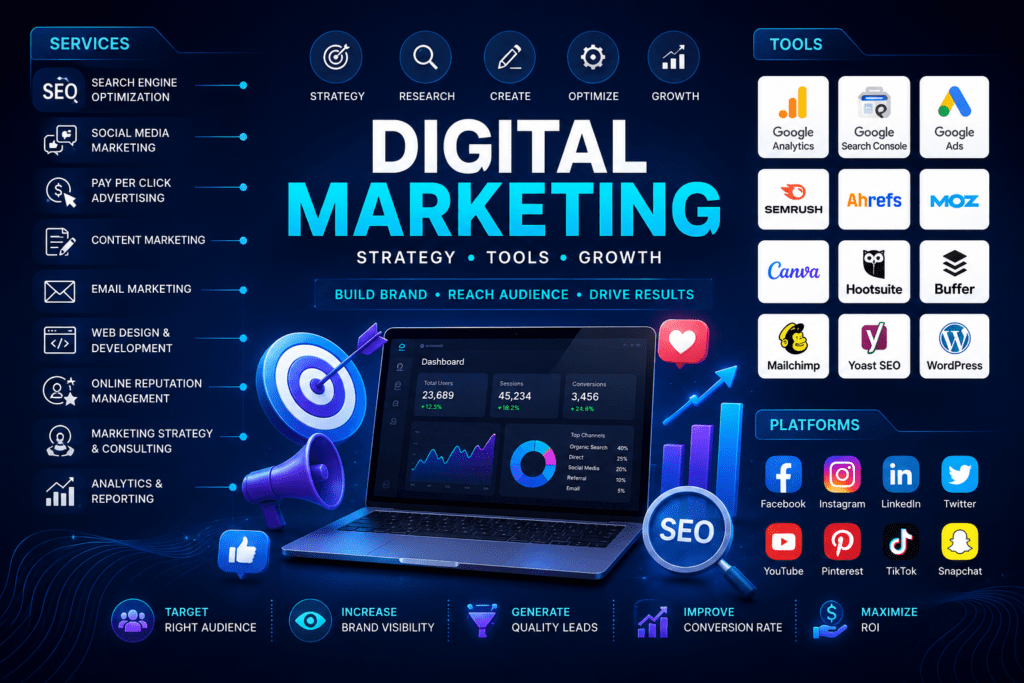
Social Media Marketing Website for Business Growth
Build your brand, reach the right audience, and grow your business with powerful social media marketing.

Introduction
A strong online presence can make it easier for people to discover, understand, and trust a business. A well planned social media marketing website can bring your social media strategy, content, branding, and customer communication together in one clear place. Instead of simply posting content, businesses can use social platforms to build relationships and guide interested visitors toward useful information and enquiries.
For a small business, professional, or growing brand, the goal should not be to collect followers alone. The real objective is to reach relevant people, create meaningful audience engagement, and turn attention into business opportunities.
Table of Contents
- What Is a Social Media Marketing Website?
- Why Social Media Marketing Matters
- Important Features
- How to Improve Audience Engagement
- Common Mistakes
- Practical Strategy
- Benefits for Business Growth
- Frequently Asked Questions
- Conclusion
What Is a Social Media Marketing Website?
A social media marketing website is a website that supports and presents a business’s social media marketing activities. It can explain services, display social profiles, share useful content, present customer reviews, and provide simple ways for visitors to make contact.
A good website should answer three basic questions quickly:
- What does the business offer?
- Who can benefit from it?
- What should the visitor do next?
For example, a local clothing business can use Instagram for product discovery while its website provides product details, customer information, and enquiry options. This creates a smoother path from social media attention to potential sales.
Why Social Media Marketing Matters for Business
Social media gives businesses a direct way to communicate with potential customers. However, simply creating accounts on different platforms is not enough.
A professional social media marketing website can support your wider strategy by connecting your social content with your website and business goals.
Here are some important benefits:
| Business Goal | Social Media Contribution |
|---|---|
| Brand awareness | Helps more people discover your business |
| Trust building | Shows expertise, reviews, and useful content |
| Audience engagement | Encourages comments, shares, and conversations |
| Lead generation | Directs interested users toward enquiries |
| Customer retention | Keeps existing customers connected |
| Website traffic | Brings visitors from social platforms |
The best results usually come when social media content and website content support each other rather than working separately.
Key Features of a Strong Social Media Marketing Website
A useful social media marketing website should be simple, clear, and easy to navigate.
Clear Service Information
Explain your services in straightforward language. Avoid filling pages with complicated marketing terms. Visitors should understand what you provide within a few seconds.
Strong Social Proof
Customer reviews, case examples, project results, and genuine testimonials can help visitors feel more confident about contacting you.
Mobile Friendly Design
Many social media users visit websites from smartphones. Your pages should load properly and remain easy to use on smaller screens.
Clear Contact Options
Make it simple for visitors to take action. Depending on your business, this could include:
- Contact forms
- WhatsApp enquiries
- Phone calls
- Consultation requests
- Product pages
- Social media profile links
How to Improve Audience Engagement
Audience engagement is more valuable when it involves the right people. A large audience is not automatically a useful audience.
To improve audience engagement, focus on content that gives people a reason to respond.
For example, instead of posting only promotional messages, a digital marketing business could share:
- Simple SEO tips
- Website improvement ideas
- Common advertising mistakes
- Short customer case studies
- Industry questions
- Helpful tutorials
When people find your content useful, they are more likely to comment, save, share, or visit your website.
A social media marketing website can then provide additional information for people who want to learn more.
Common Social Media Marketing Mistakes
Many businesses make the mistake of treating social media as a place only for advertisements.
Some common problems include:
- Posting without a clear purpose
- Using the same message for every platform
- Ignoring customer comments
- Focusing only on follower numbers
- Having an outdated website
- Using unclear calls to action
- Publishing content without checking performance
Good marketing requires regular observation. Look at which posts receive meaningful audience engagement, which pages attract visitors, and which activities generate enquiries.
A Practical Strategy for Business Growth
A simple approach can make your social media marketing website more effective.
Step 1: Understand Your Audience
Identify what your customers need, what questions they ask, and what problems they are trying to solve.
Step 2: Choose Suitable Platforms
You do not need to be active everywhere. Select platforms where your target customers are most likely to spend time.
Step 3: Create Useful Content
Mix educational, informative, entertaining, and promotional content. This keeps your communication more natural.
Step 4: Connect Social Media With Your Website
Every platform should have a clear connection to relevant website pages. Avoid sending every visitor to the same generic homepage.
Step 5: Measure Results
Track website visits, enquiries, conversions, content performance, and audience engagement. These numbers can help you decide what to improve.
How a Social Media Marketing Website Supports Long Term Growth
A social media marketing website can become a central point for your online brand. Social platforms may help people discover you, while your website can provide deeper information and encourage action.
For example, imagine a small service business that regularly publishes useful social content. A potential customer sees a helpful post, visits the social media marketing website, reads a service page, checks customer feedback, and then submits an enquiry.
That journey is much more useful than simply gaining another follower.
Frequently Asked Questions
1. What is a social media marketing website?
It is a business website designed to support social media marketing by presenting services, content, social profiles, reviews, and contact options.
2. How can social media help a business grow?
Social media can increase brand awareness, attract website visitors, encourage audience engagement, and create opportunities for leads and sales.
3. Why is audience engagement important?
Audience engagement shows that people are actively interacting with your content. Meaningful engagement can help strengthen relationships and improve brand recognition.
4. Should every business have a social media marketing website?
A professional website can be useful for businesses that depend on online visibility, customer enquiries, reputation, or digital sales.
5. How often should businesses post on social media?
There is no single ideal frequency. Consistent, useful content is generally more valuable than posting frequently without a clear purpose.
6. How can I measure social media marketing results?
Track relevant metrics such as website traffic, enquiries, conversions, engagement, reach, and content performance.
Conclusion
A social media marketing website should do more than display social media links. It should help visitors understand your business, build confidence, and take the next step. When your website, social content, branding, and audience engagement work together, your marketing becomes easier to understand and measure.
The strongest approach is simple: understand your audience, publish useful content, connect social platforms with your website, and improve your strategy based on real results.
CTA
If you want to improve your online presence, start by reviewing your current website and social media strategy. Identify what is working, find the gaps, and make small improvements that create a better experience for your audience.